Central Park Photo Guide: Where to Go, When to Go and What to Know
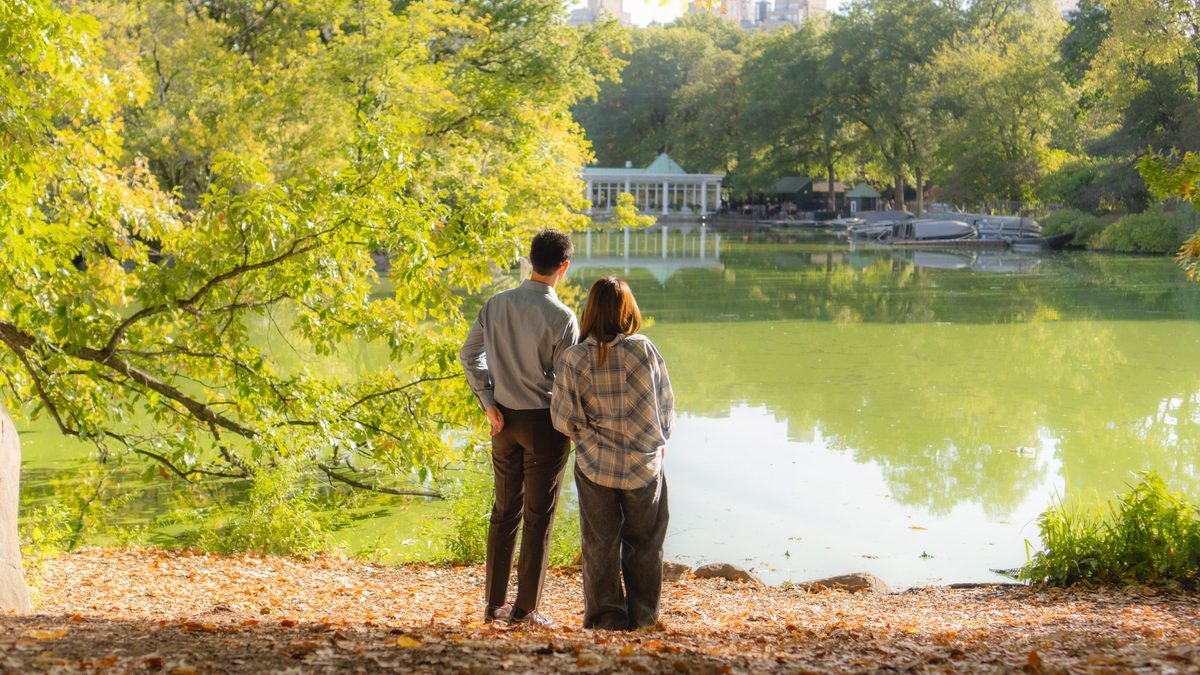
Central Park is 843 acres, and a good session uses only a few of them. After photographing families, couples and proposals here in every season, this is how I think about the park: the spots I return to, when each one works best, and something worth knowing about it.
At a Glance
- Bethesda Terrace: late morning to early afternoon, for the shade of the arcade.
- Bow Bridge: sunrise or the last hour before sunset.
- The Mall: early morning, or any overcast day.
- The lake and Loeb Boathouse: golden hour.
- Belvedere Castle: late afternoon.
- Quiet paths and meadows: weekday mornings.
Bethesda Terrace and Arcade
The terrace is the architectural heart of the park. Calvert Vaux designed it, with intricate carvings by Jacob Wrey Mould, and the fountain at its center was unveiled in 1873. For a photographer it is three settings in one: the covered arcade, the fountain plaza and the stairs.
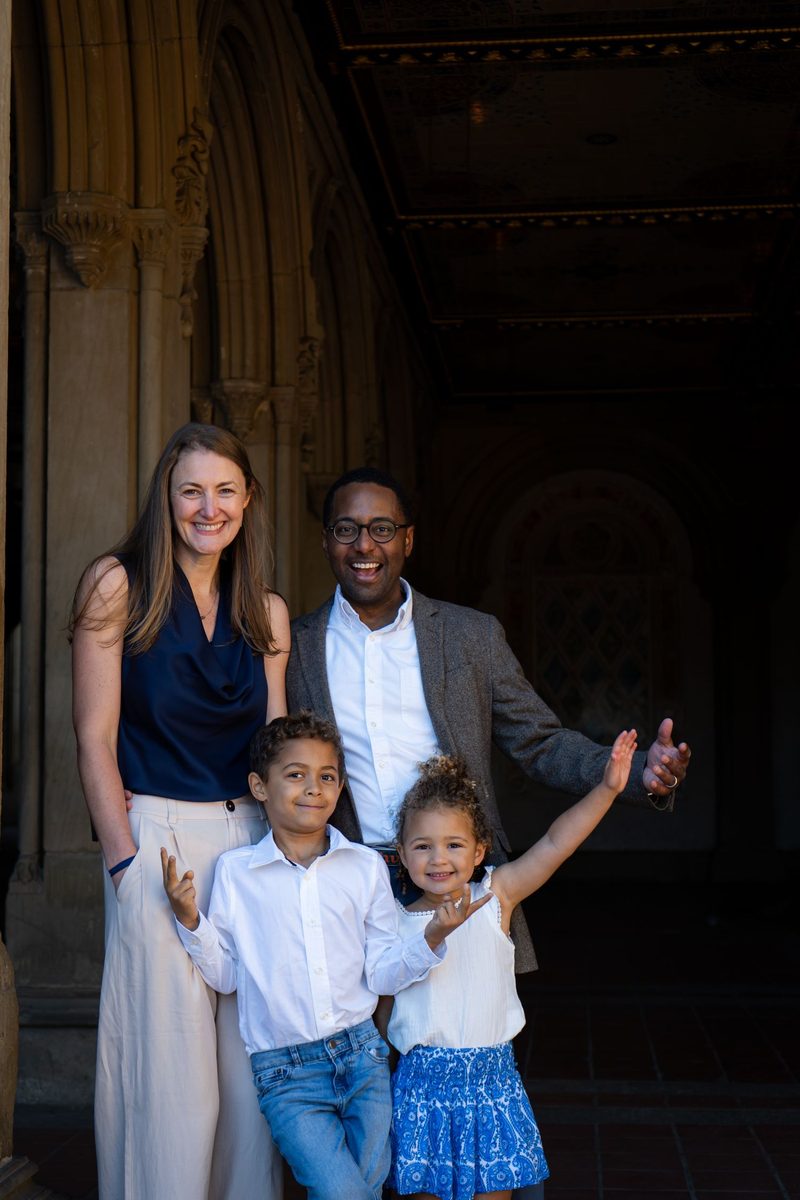
The arcade gives soft, even light at noon, so it is where I go when the sun is harsh elsewhere. Kids love to run through it and call out to hear the echo.
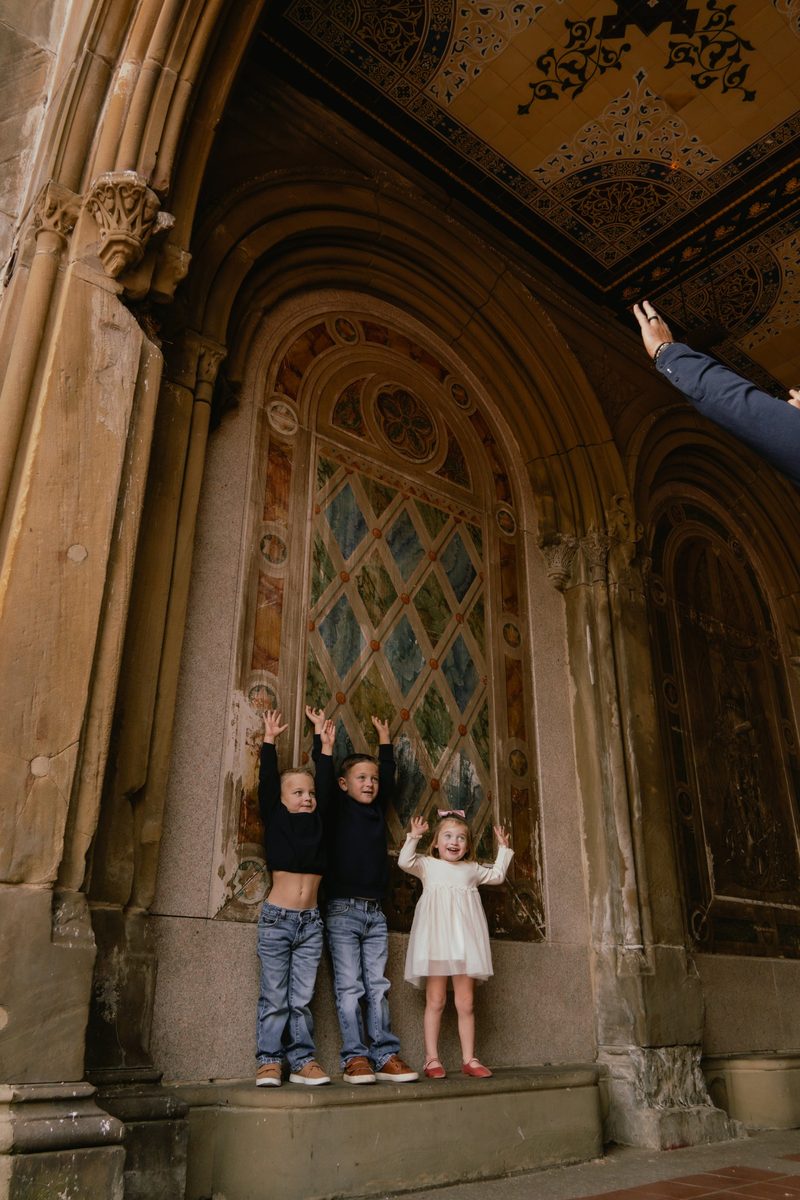
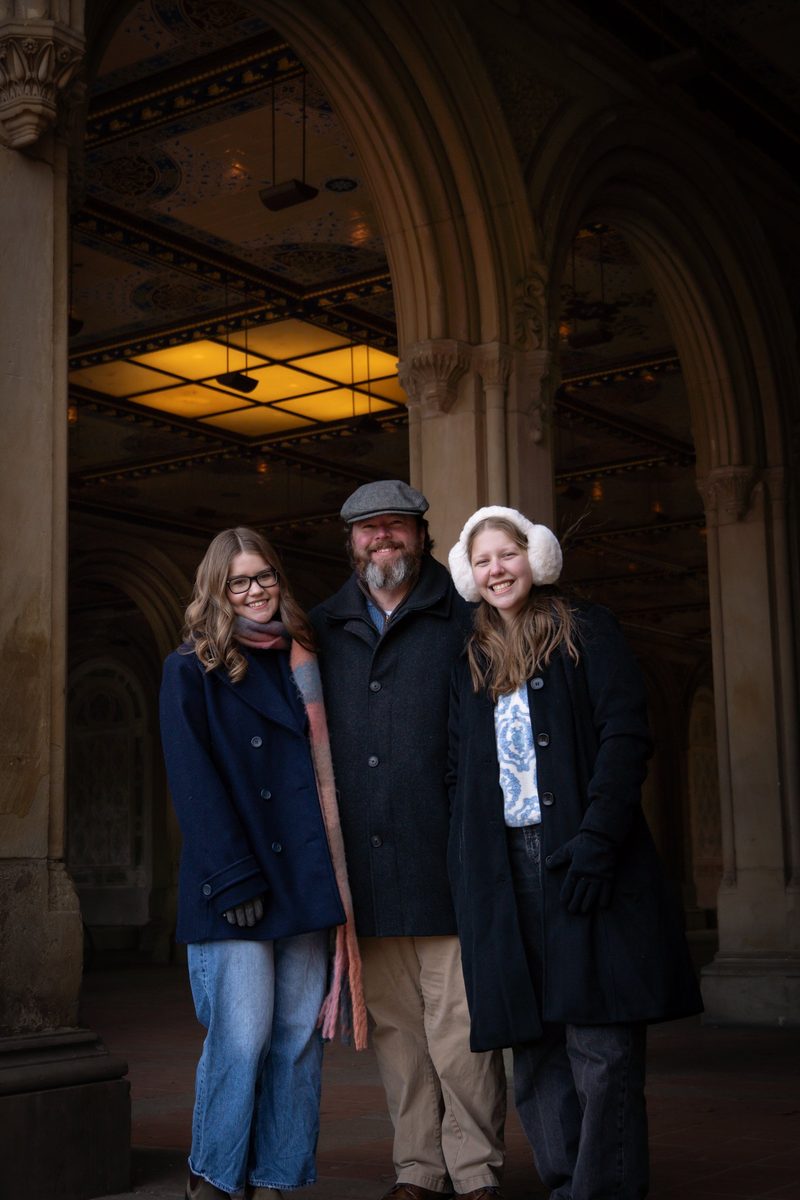
The wide stairs and the carved stone wall work well for siblings and bigger groups, because everyone can sit at a different height.
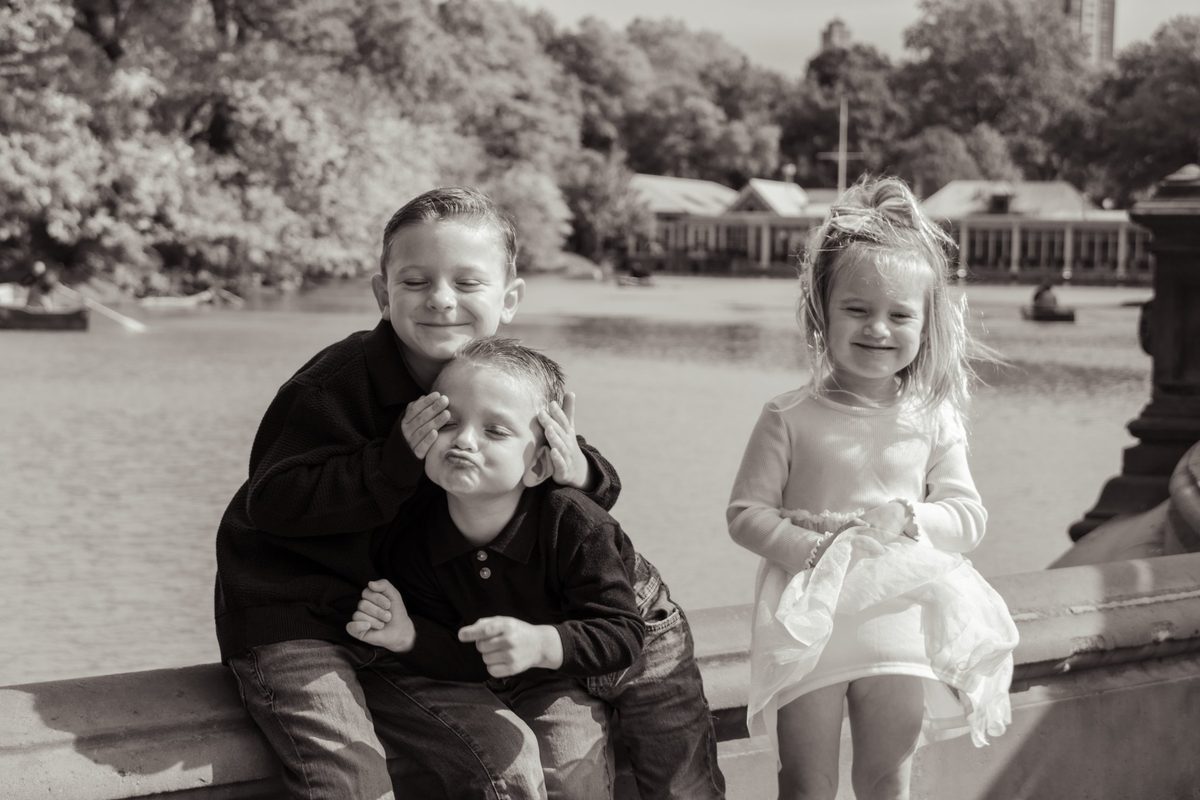
Best time: late morning to early afternoon for the arcade, or early morning for the plaza without crowds. After snow the stairs and lake turn white and still, which is one of the prettiest times of year.
Fun fact: the arcade ceiling is covered in nearly 16,000 Minton tiles made in Stoke-on-Trent, England. The Central Park Conservancy calls it the only ceiling in the world with inlaid (encaustic) tiles like these. The fountain at the center, Angel of the Waters, was made by Emma Stebbins and unveiled in 1873. It is widely cited as the first major public art commission in New York City given to a woman.
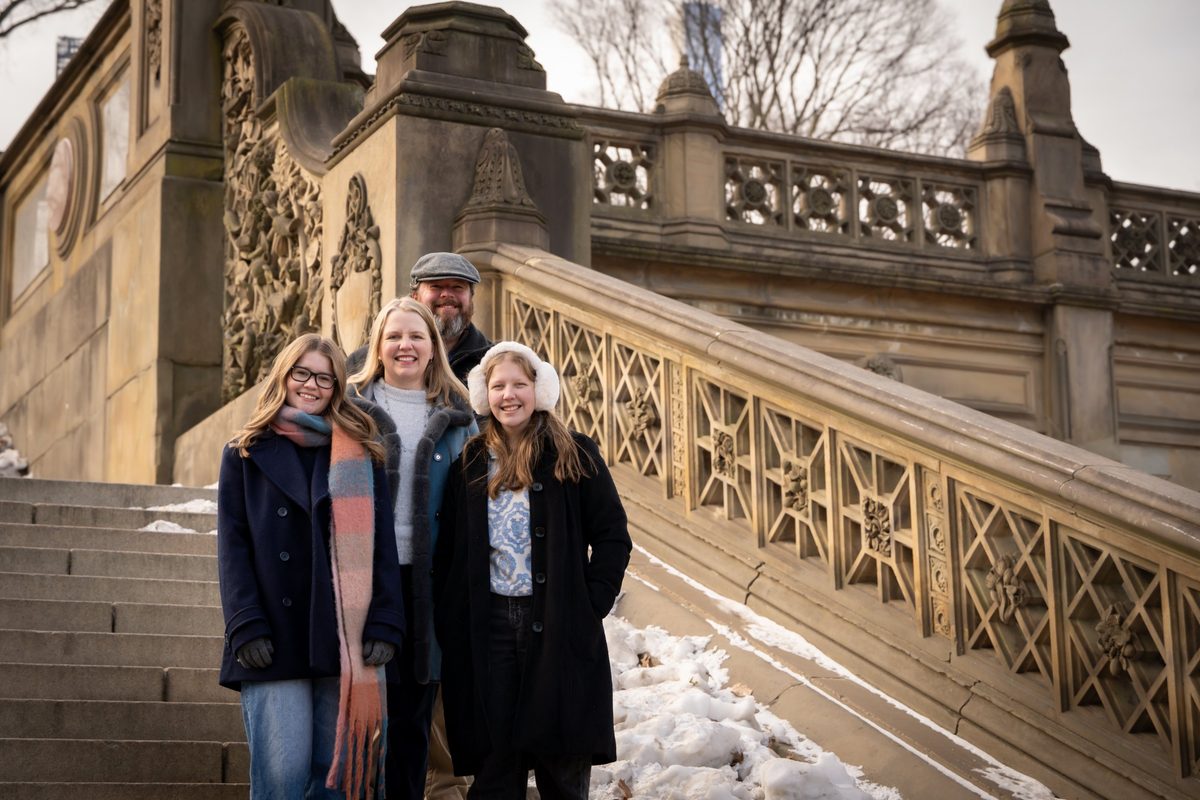
Bow Bridge and the Lake
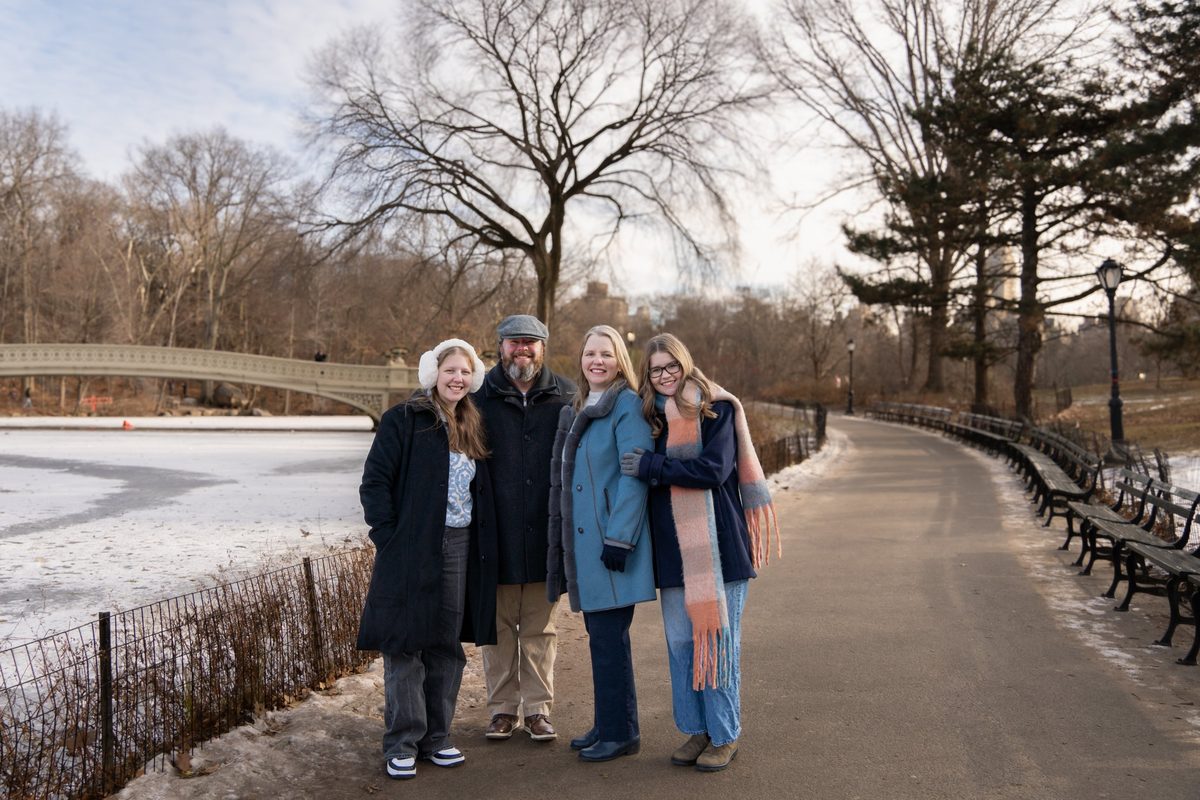
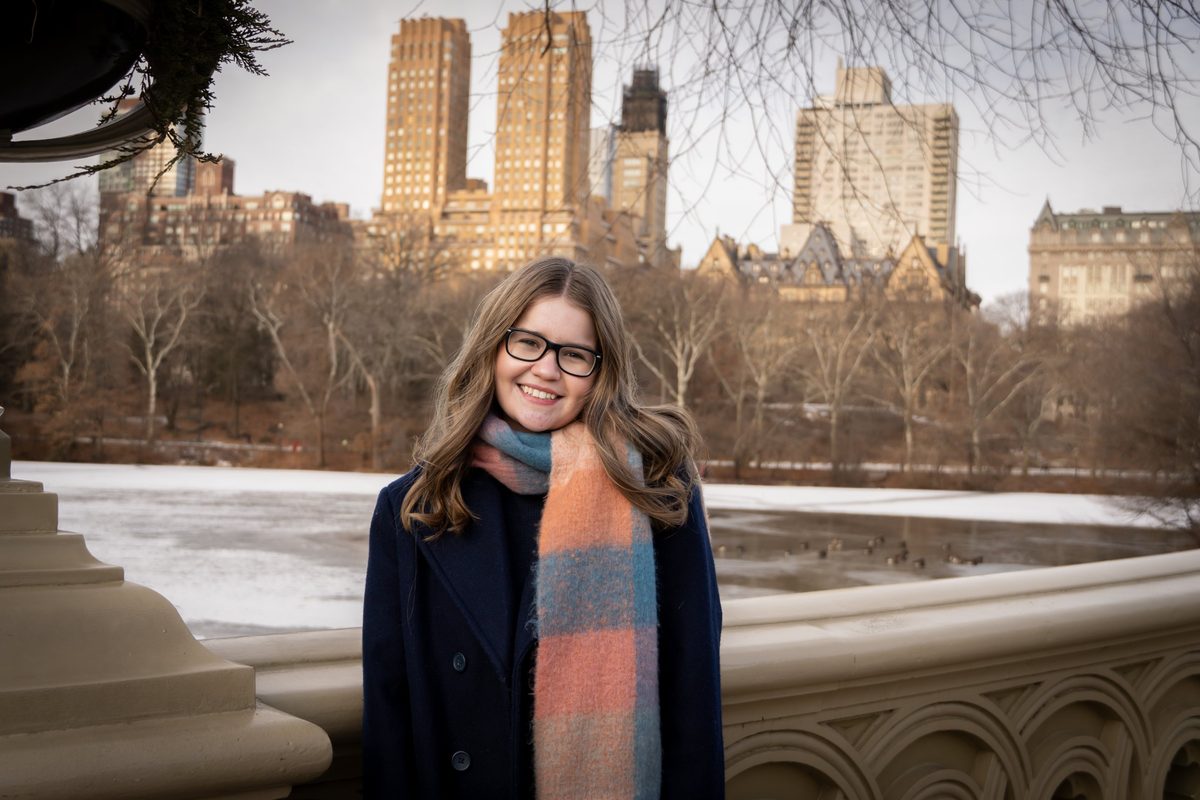
Bow Bridge is the most photographed spot in the park. The curve of the bridge, the water below and the trees around the lake make a complete picture on their own. It works for engagements, proposals, maternity sessions and families. If you're planning a proposal, I photograph from a distance so the moment stays a surprise.
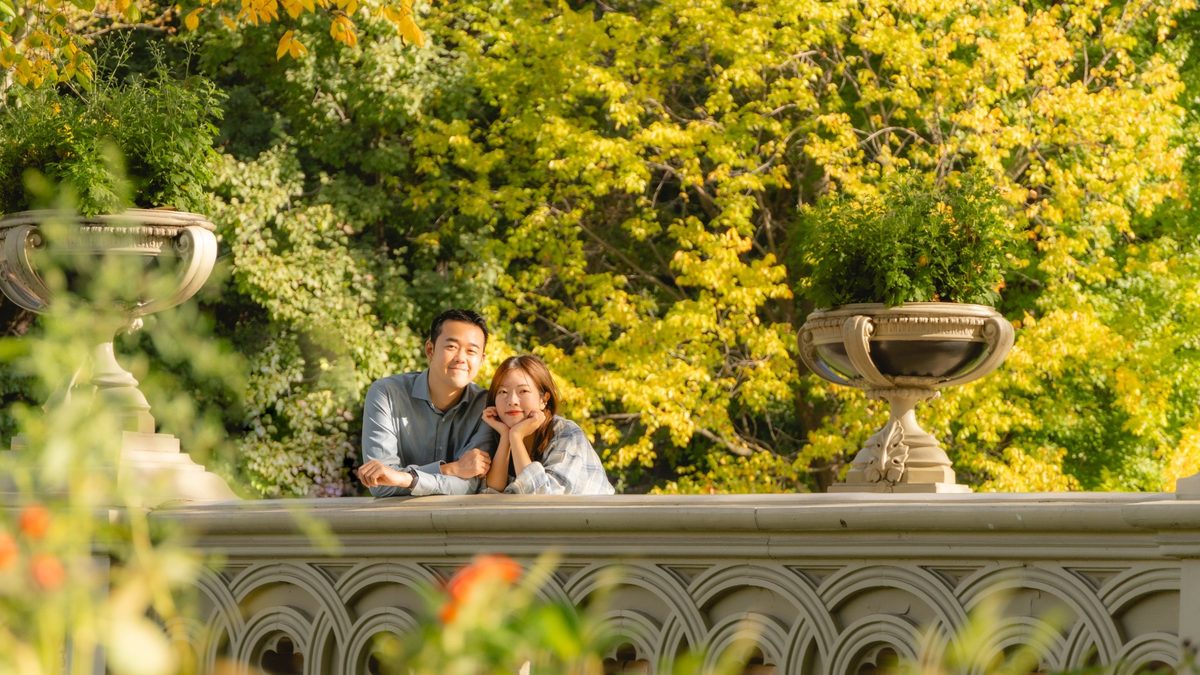
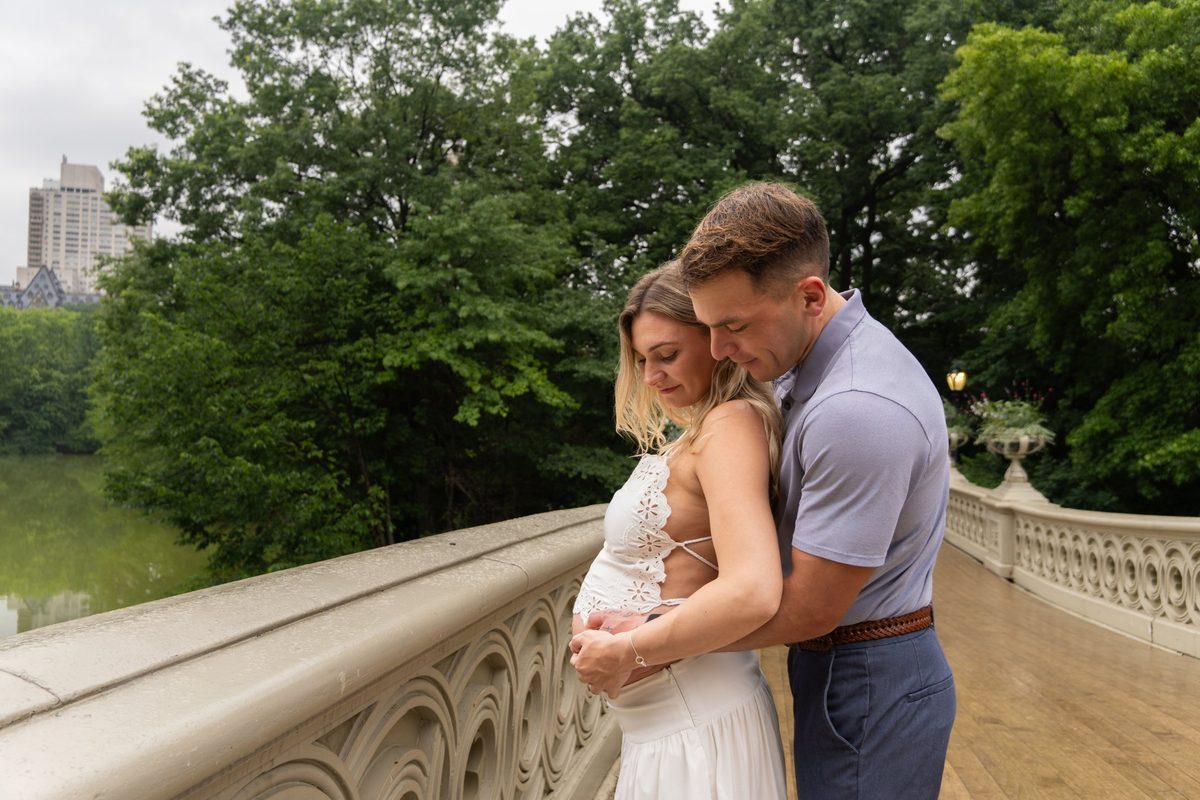
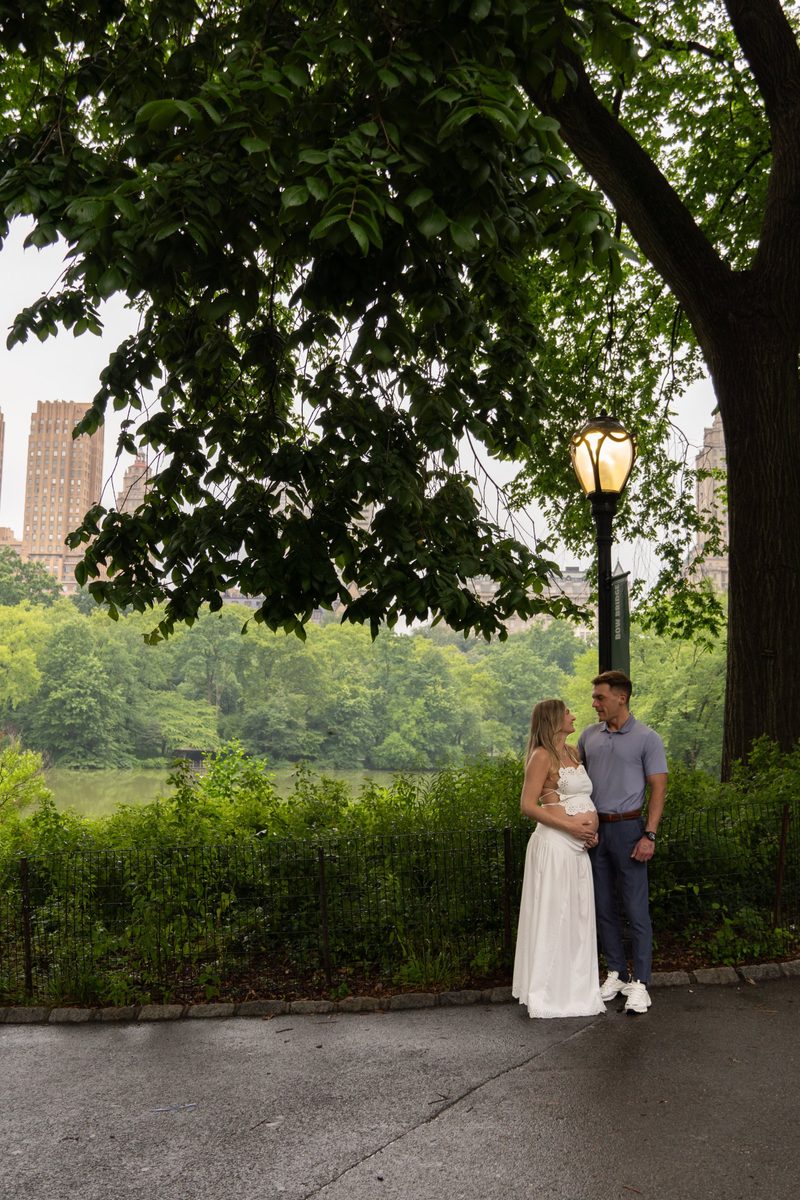
Best time: sunrise is quietest and softest, and the last hour before sunset is warm and golden over the water. Midday is crowded and the light is hard, so I avoid it. Autumn is the favorite season, and winter is a quieter second choice.
Fun fact: the bridge was completed in 1862 and designed by Calvert Vaux and Jacob Wrey Mould. It is one of seven ornamental iron bridges in the park, and it is named for its shape, which curves like an archer's bow.
The Mall and Literary Walk
The Mall is the long, straight promenade at the center of the park, and Literary Walk is its first stretch, lined with statues of writers. Old elms meet overhead to make a green or golden tunnel. The path is wide and flat, which makes it easy with small children, and the benches are good for relaxed seated photos.
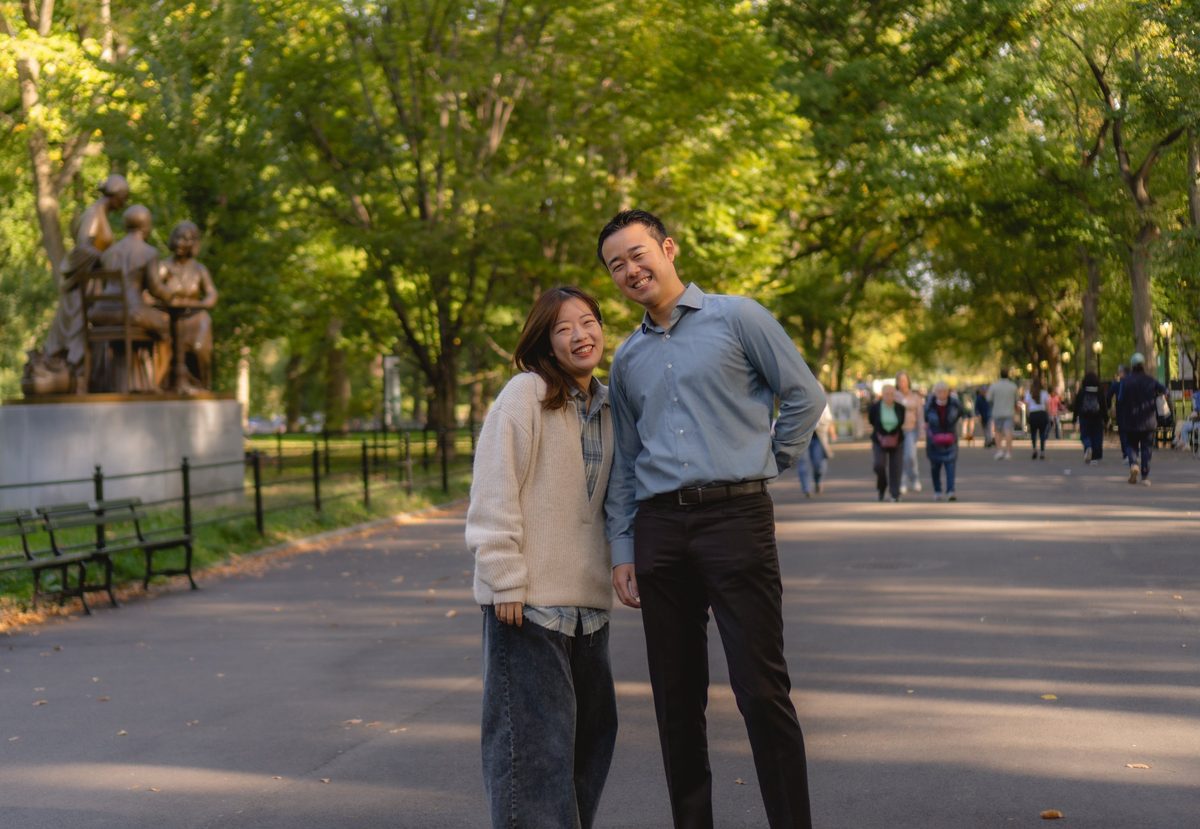
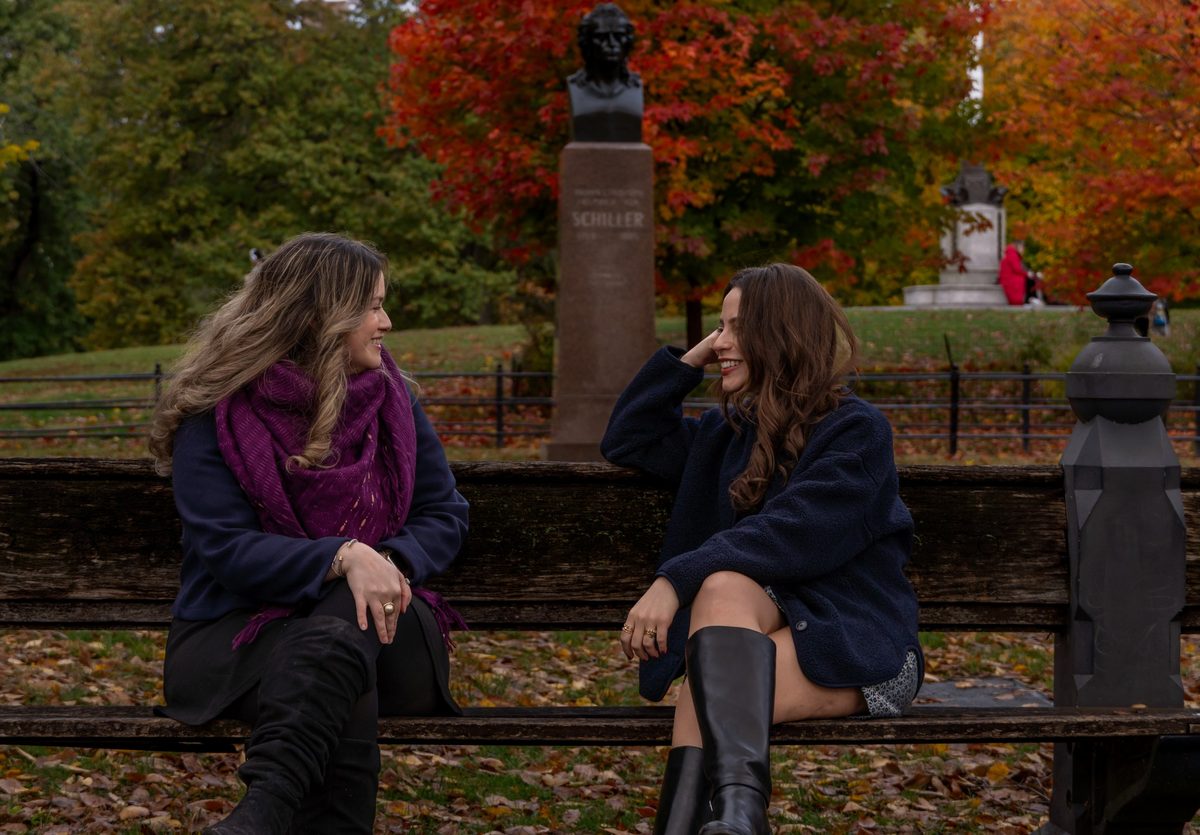
Best time: early morning, when the light comes in low through the trees, or any overcast day. In late October the leaves turn yellow and the path glows.
Fun fact: the Central Park Conservancy describes these as one of the largest and last remaining collections of American elms in the world. Dutch elm disease killed millions of American elms across the country in the 20th century, and the park's gardeners still work to protect these.
Loeb Boathouse and the Lake Shore
Open views across the water and a shoreline that is easy for kids to walk. It works well for siblings and couples, and the water doubles the light.
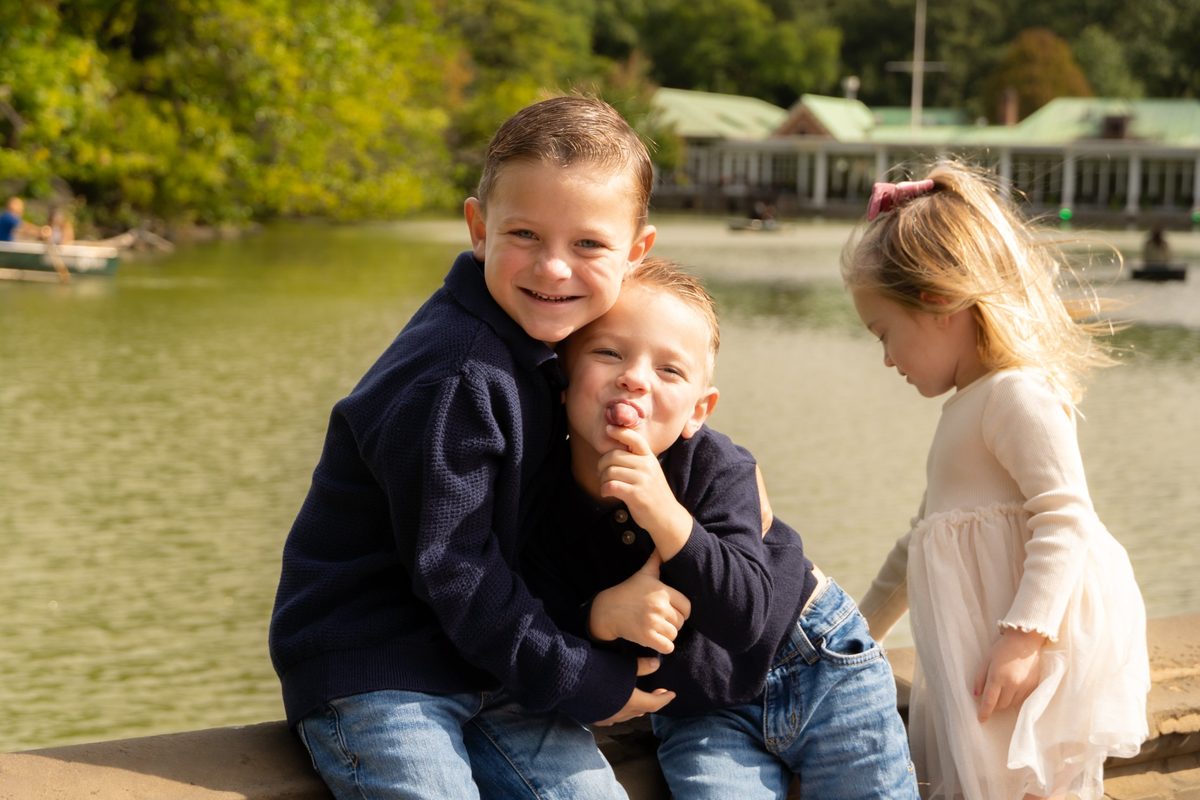
Best time: golden hour.
Fun fact: the lake is man-made, like the rest of the park's water. The whole landscape was designed and built in the 1850s and 1860s.
Belvedere Castle
A good setting for a picnic-style session or a proposal with a view.
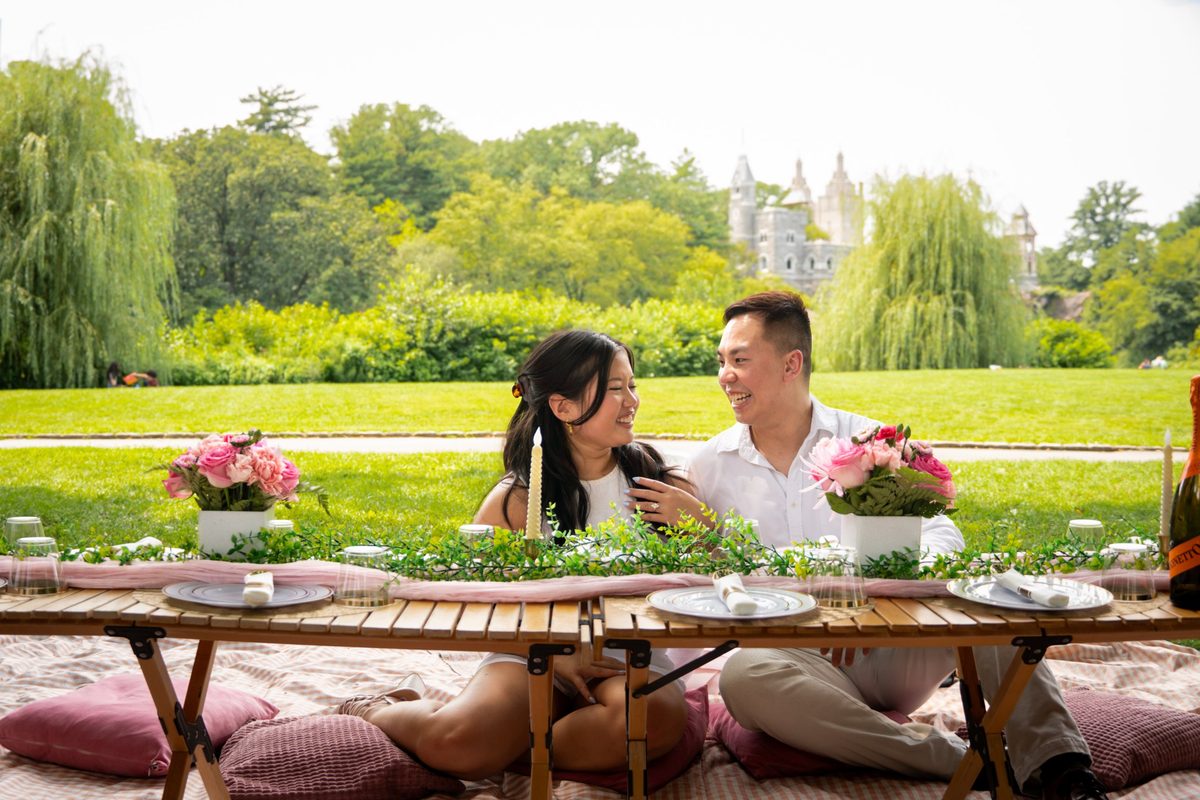
Best time: late afternoon, when the stone warms up.
Fun fact: belvedere is Italian for "beautiful view," and the castle was finished in 1869 as a lookout, not a home.
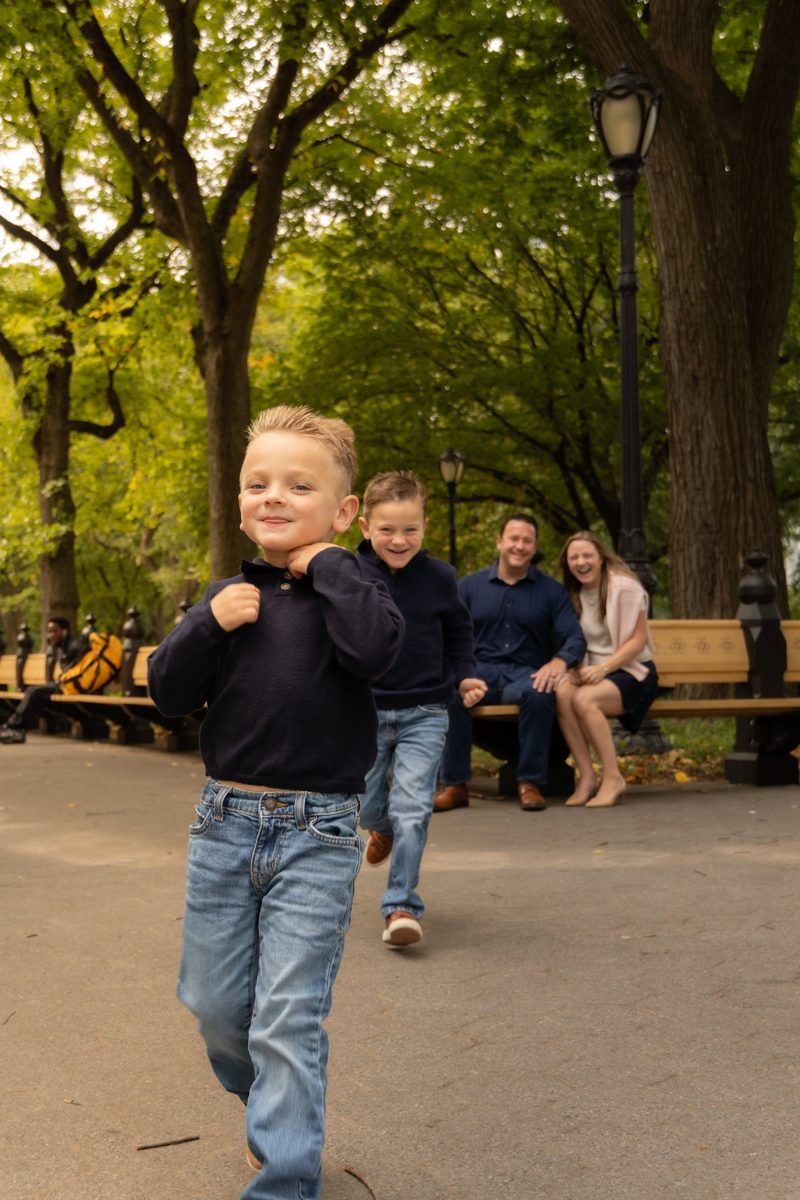
Quiet Paths and Meadows
When you'd like fewer people in the frame, I take you to smaller paths and open grass away from the famous spots. Weekday mornings are the calmest.
The Best Time of Year
- Autumn: the most popular season. Color usually peaks from late October into early November, and it books up early.
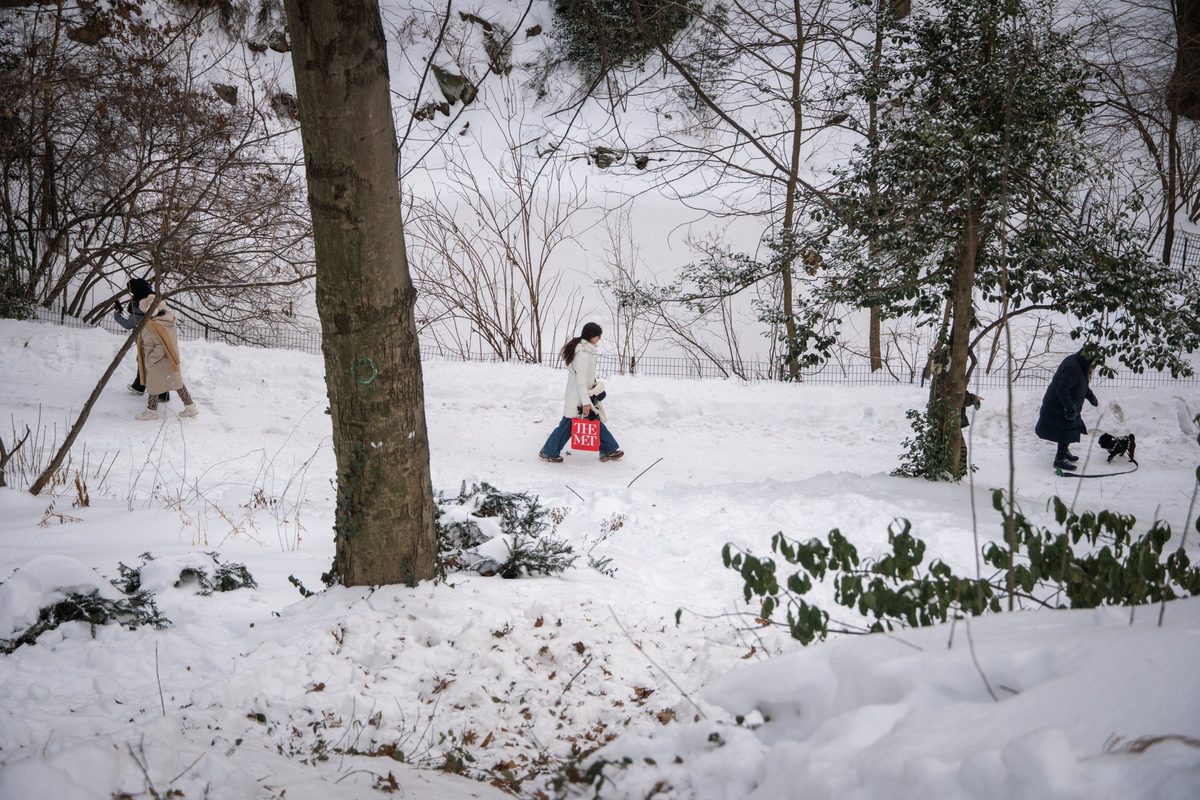
- Winter: quiet and often overlooked. After snow the park goes still and white.
- Spring: blossoms and fresh green leaves in April, for a short time. Dates shift with the weather, so I keep a flexible window.
- Summer: long evenings and lots of golden light. Go late, after the heat of the day.
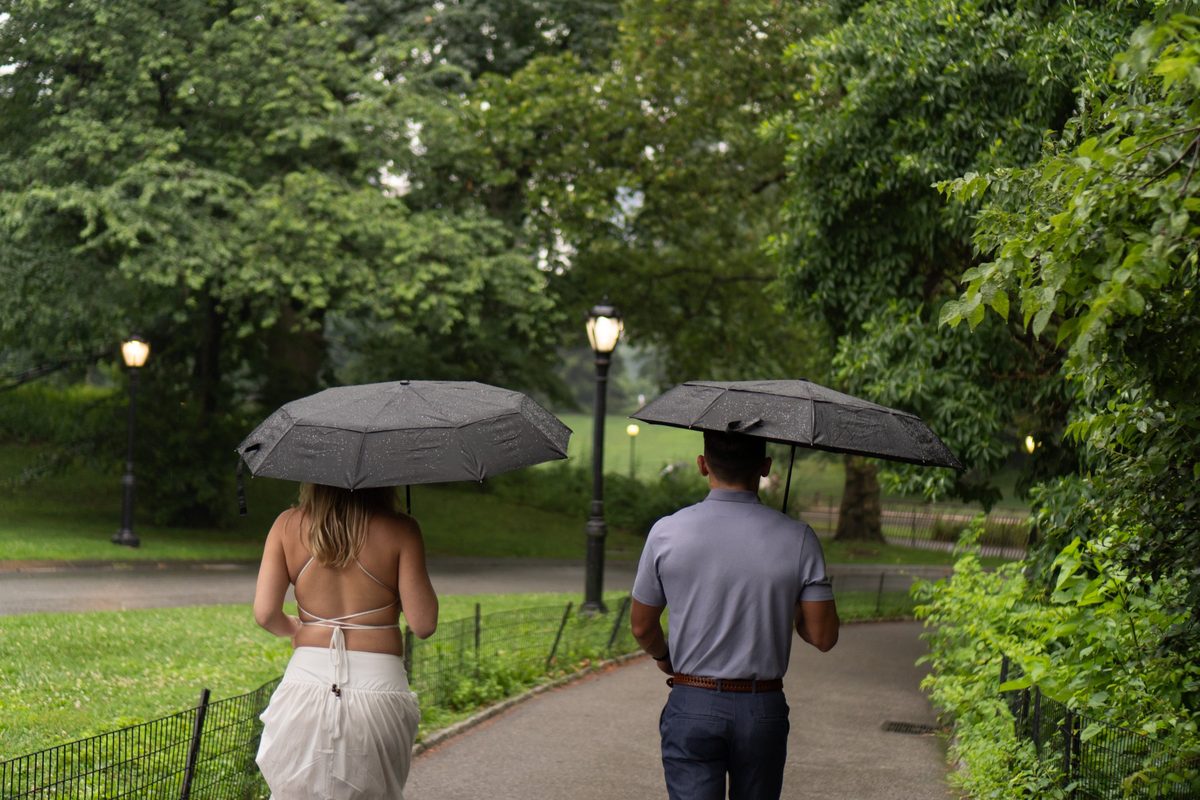
- Rain: don't cancel at the first drop. Umbrellas, wet paths and soft gray light can give you some of the most original photos of the year.
How I'd Plan Your Session
Two or three spots close together is plenty. Pick one for the famous backdrop and one for room to move. Sunrise is the quietest and softest, and the hour before sunset is the warmest. Tell me your date and group size and I'll suggest the order and the timing. See the Central Park photographer page or ask about a date.